People
The World Still Runs on People
Every major technology has changed what people do. The bigger story is what people become capable of doing next.
Ariel Kopolovitz6 min read
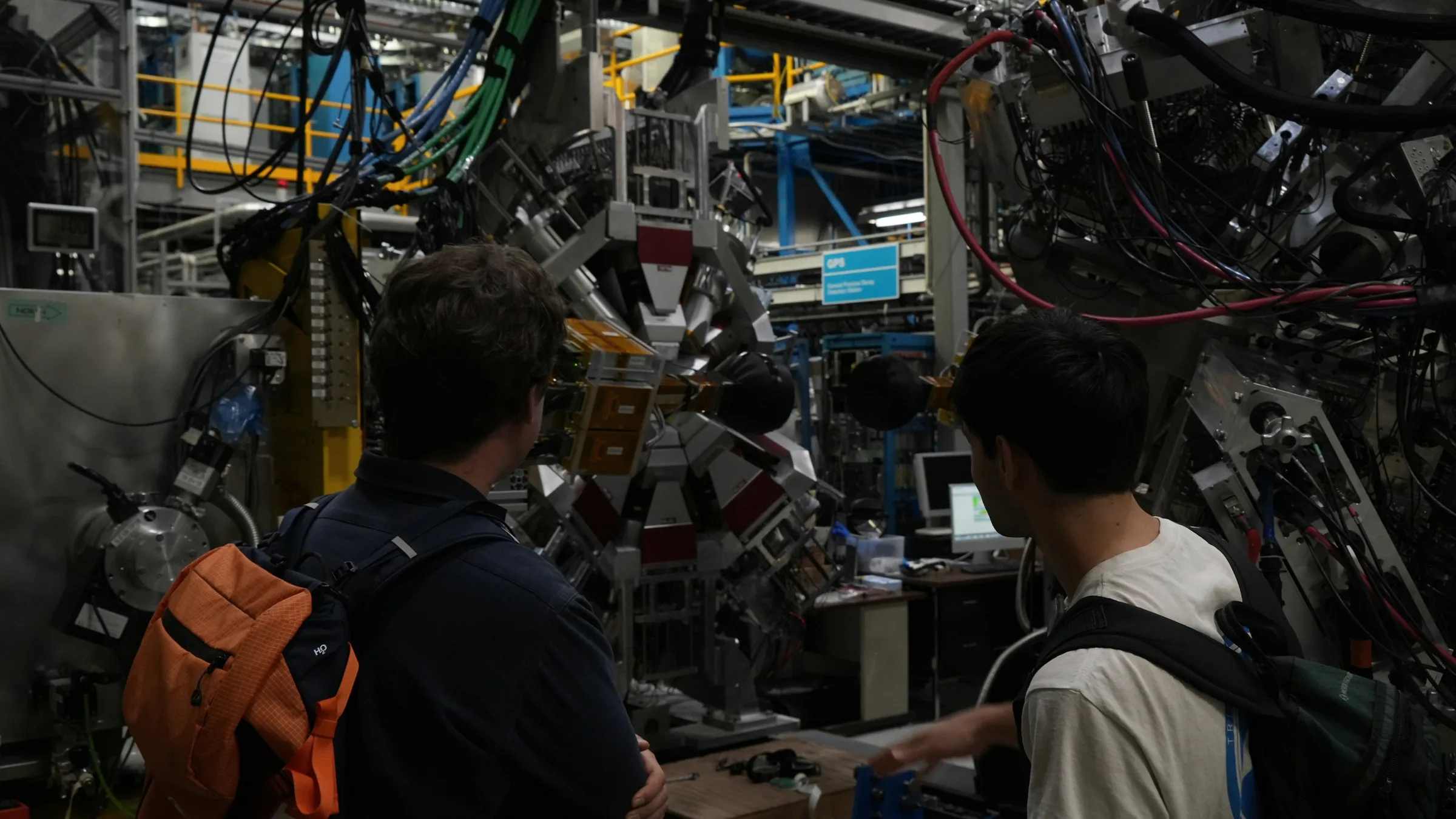
The world has always moved because people decide that something should exist that does not exist yet. A company begins that way. So does a medicine, a film, a new kind of battery, a bridge, a scientific instrument or a spacecraft. Before any of those things become systems and institutions, someone has to imagine a different version of reality and care enough to push toward it.
That is easy to lose sight of in a moment when so much of the conversation about technology is framed around what machines will do instead of us. AI can already write, code, analyze, design, research and reason through problems that once belonged entirely to people. The capabilities are moving quickly enough that anxiety about work is reasonable. Some tasks will disappear, some roles will change dramatically and some jobs will no longer make economic sense in the form we know today.
None of that changes the larger pattern of technological progress. Human history is not a story of tools slowly making people irrelevant. It is a story of people creating new capabilities and then finding uses for them that were impossible to see beforehand. The printing press changed who could distribute ideas. Industrial machinery changed the scale of physical production. Computers changed calculation and information processing. The internet changed access, communication and distribution. Each shift displaced work; each also opened fields of activity that did not exist before.
AI is unusual because the capability being amplified sits so close to how we think about ourselves. A machine that lifts more weight than a person feels like a machine. A system that writes, reasons or creates feels more personal. But the underlying question is still familiar: what happens when people suddenly have access to much more capability than they had before?
New technology rarely leaves ambition unchanged
One mistake in the replacement debate is to imagine a fixed amount of useful work. If a machine does more, the assumption goes, people must do less. That makes sense only if the goal is to preserve the world exactly as it is. The world never cooperates with that assumption.
When computing became cheaper, humanity did not decide it had enough computing. We embedded computers into almost everything. When communication became nearly free, we did not simply spend less money saying the same things. We created social networks, global communities, streaming, online marketplaces and forms of business that depended on instant communication being normal. When software became easier to build and distribute, the result was not a smaller software industry. It was software everywhere.
Capability changes demand because people begin attempting things that were previously too expensive, too slow or too complicated. There are companies that have never been started because they required too much operational machinery to make sense. Scientific questions go unexplored because the analysis would take too long. Products aimed at narrow groups never get built because serving those groups could not support the team required to operate the business. Countless useful ideas die in the distance between imagining something and being able to execute it.
AI can shorten that distance. A person without a large team can get further into a prototype, a researcher can work through more material, and a small business can access capabilities that were once reserved for organizations with specialists in every function. Expertise does not become irrelevant; often it becomes more powerful because the expert has more leverage. What changes is how many people get the chance to try.
The beauty of technology is what people build with it
Look at almost anything remarkable and the human chain underneath it is longer than it first appears. A smartphone contains decades of work in materials science, semiconductors, batteries, software, networks, manufacturing, optics and industrial design. A commercial airplane rests on generations of advances in aerodynamics, engines, navigation and safety. A modern hospital is an accumulation of discoveries and systems that no single person could understand in full.
A rover on Mars is one of the clearest examples because the machine itself is extraordinary, yet the thing that makes it moving is human. People on Earth decided another planet was worth understanding. Thousands of decisions, failures, calculations, arguments and years of work eventually became a machine moving across a world none of them could stand on.
Technology did not decide to go there. People did.
That distinction matters because the point of a tool is not that it can perform an impressive action in isolation. Its significance comes from what people can now attempt because the tool exists. Every generation inherits capabilities that would have looked like magic to the one before it and almost immediately begins finding their limits. We are never satisfied for long, which is frustrating in ordinary life and probably one of the reasons civilization keeps moving.
Jobs will change, but people do more than jobs describe
It would be dishonest to turn this into a reassurance that every current job will survive. Technology has always changed labor unevenly, and AI will do the same. Some work is repetitive enough that software will simply become the better way to perform it. Some companies will need fewer people in certain functions. The transition will be painful for people whose skills lose value faster than new opportunities appear.
But a job description is a poor definition of why a person matters. The best engineer is not valuable because they type the most code. The best designer is not valuable because they produce the most screens. The people who become important inside companies usually accumulate judgment, context and trust. They know what good looks like, understand consequences that are difficult to write into a process and take responsibility when there is no obvious answer.
AI will become better at parts of those things too. The boundary will move. Still, more machine capability does not remove the need for direction; it can make direction more consequential. If an idea can be executed quickly, the quality of the idea matters more. If a team can generate dozens of options, taste matters more because producing the options is no longer the hard part. If information becomes abundant, deciding what deserves attention becomes harder, not easier.
That is why the future of AI at work should not be measured only by how many people can be removed from a process. Sometimes removal is the right outcome. But the more interesting possibility is amplification: people directing capabilities they could never have afforded to place underneath themselves before.
We are entering another age of invention
The most difficult part of a technological shift is that replacement is visible before creation is. We can point to the task a model performs today. We cannot point as easily to the company somebody will build five years from now because that capability became ordinary. The old category already has a name; the new one often does not.
That is why predictions made at the beginning of a platform shift tend to undershoot the strange parts. Saying the internet would improve communication was correct and almost useless as a description of what followed. It did not tell you about online creators, global marketplaces, streaming, cloud companies, social networks or millions of jobs built around products that had no meaningful predecessor.
AI is still early enough that we are focused on first-order questions: what task can it do, how many hours can it save, which role changes. Those questions matter because people have to live through the transition. They are simply not the whole story. The second-order effects arrive later, once the capability becomes boring enough that people stop talking about the technology and start building with it.
There is no reason to think human ambition has reached its limit at the exact moment our tools became more powerful. We still have diseases we cannot cure, energy systems to reinvent, parts of the universe we barely understand, institutions that work badly, products that should exist and millions of smaller problems nobody has had the resources to take seriously. People still have more ideas than the world has capacity to execute.
Every company, invention and mission begins with someone deciding the present version of the world is not enough. AI can change the amount of capability behind that decision. It can make some kinds of work disappear and make other kinds imaginable for the first time. What it cannot do is remove the human fact at the center of progress: someone still has to care that the next thing gets built.
The world still runs on people. AI gives them more to build with.